

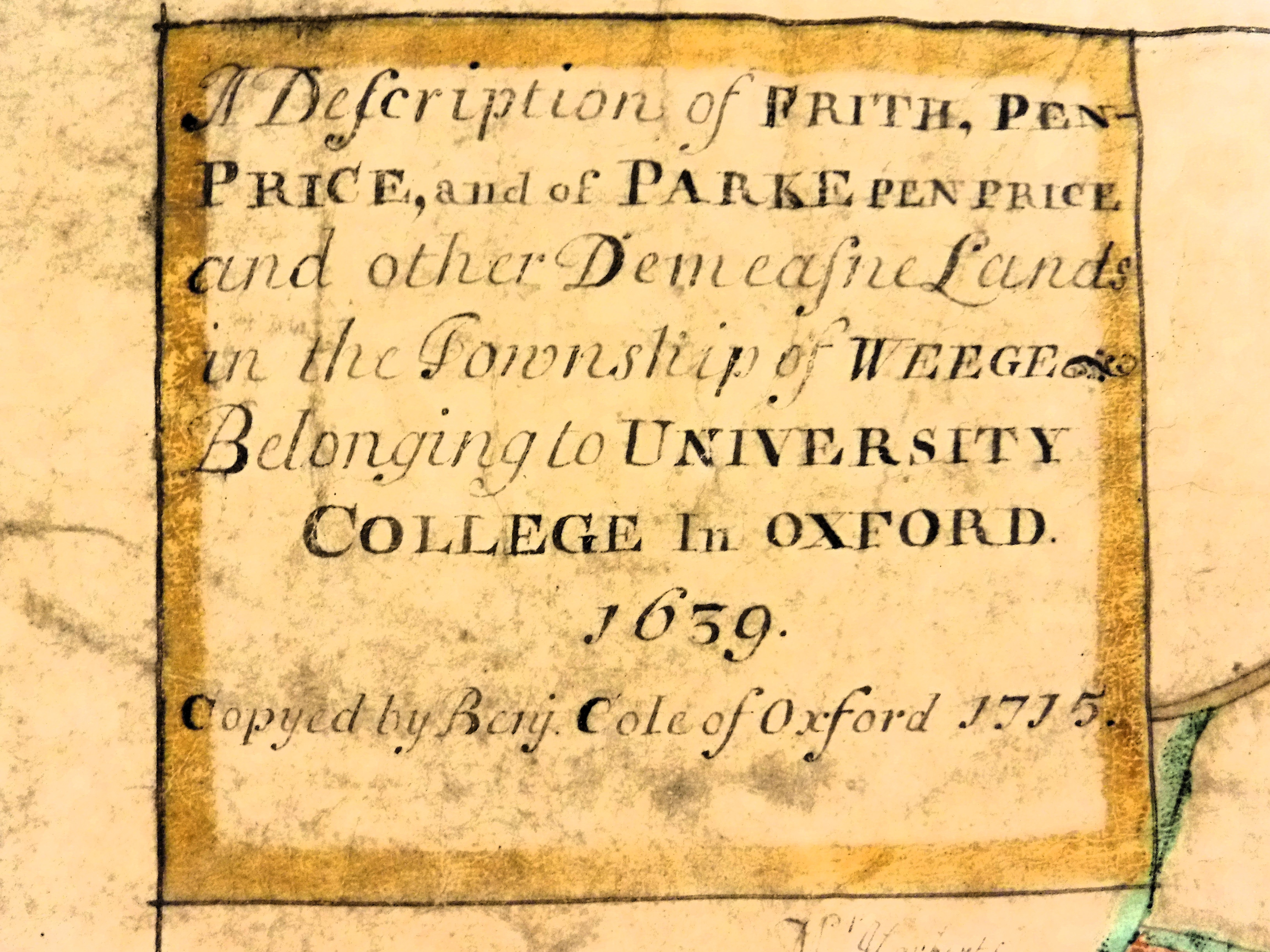
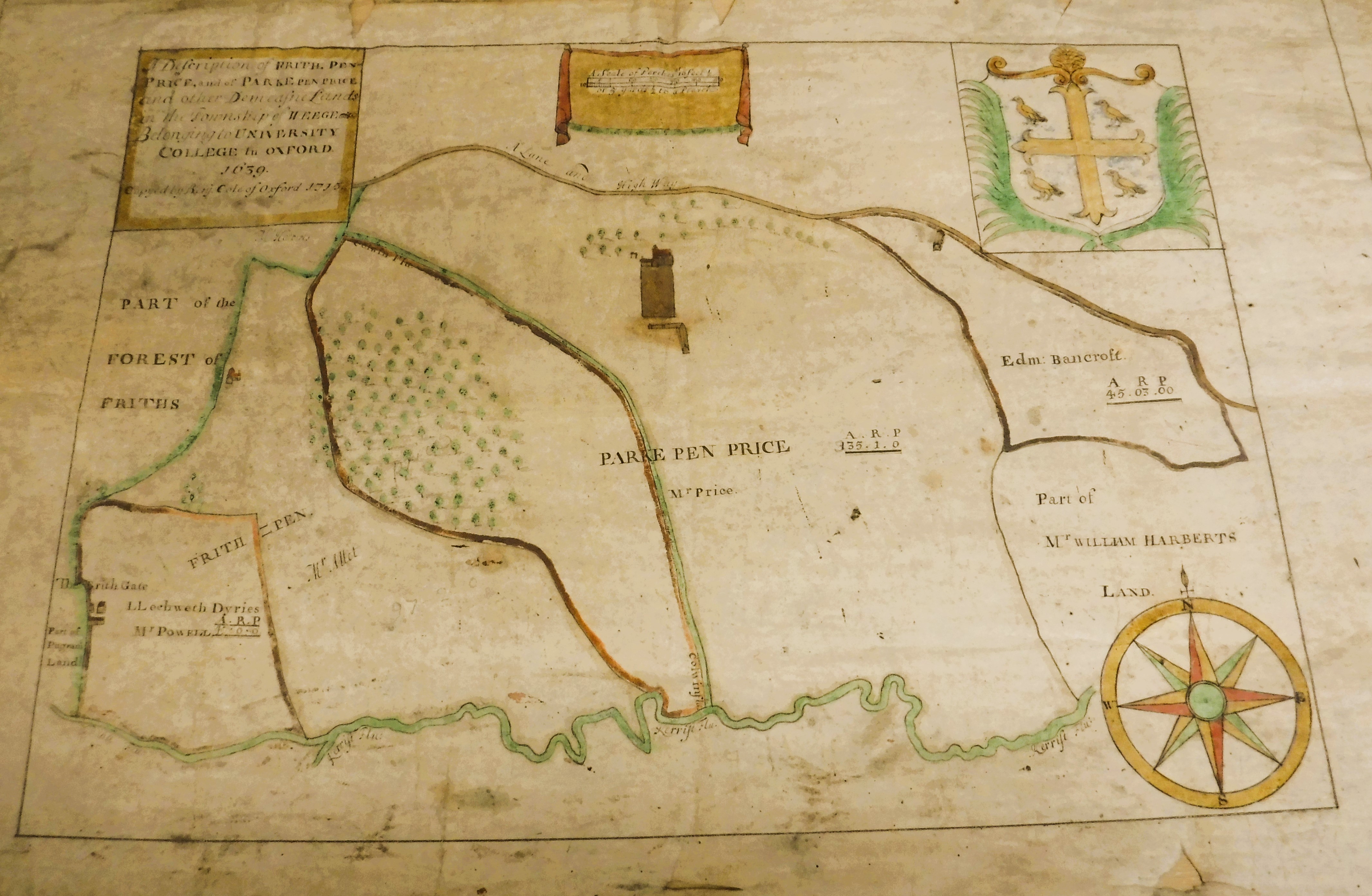
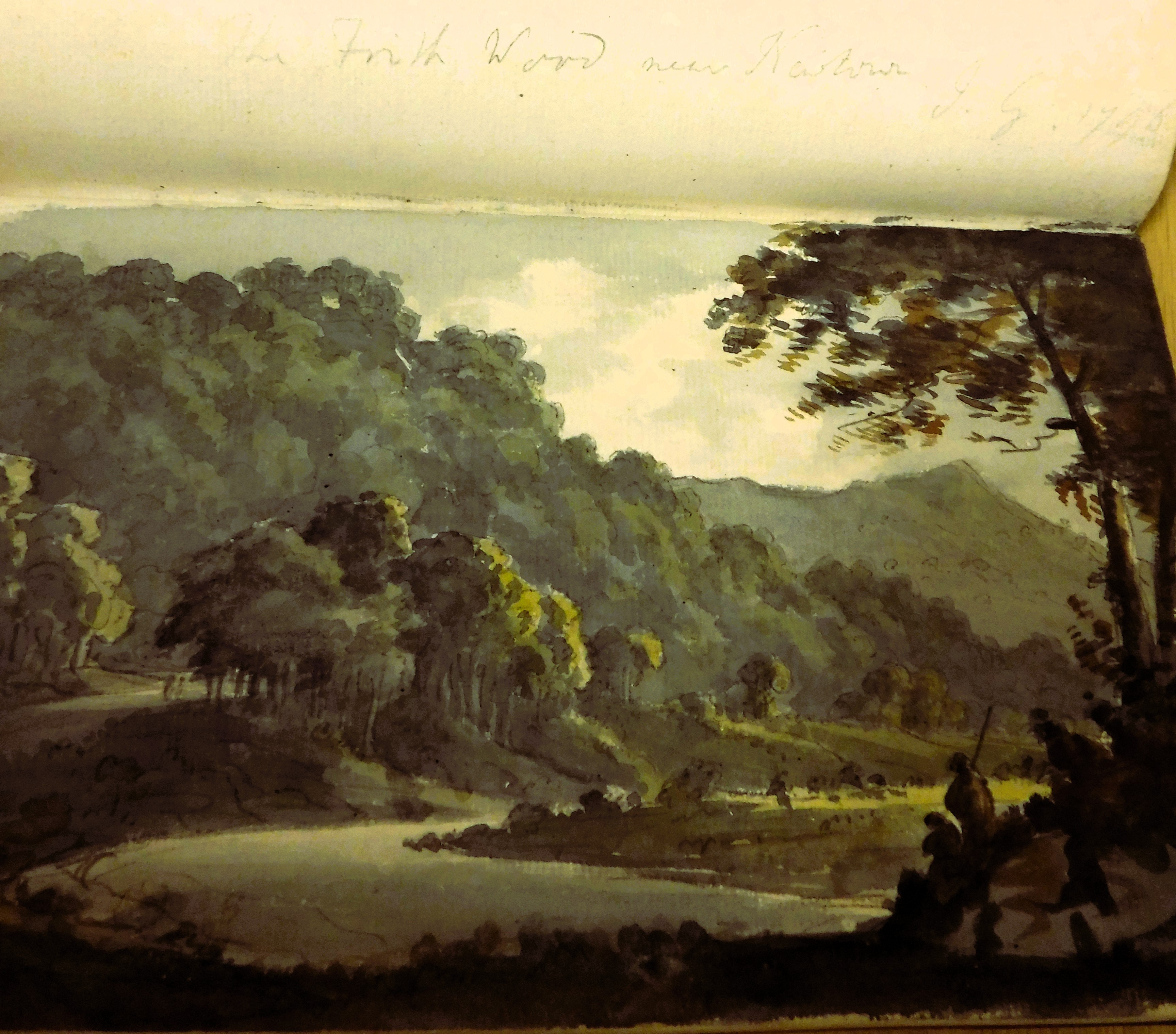
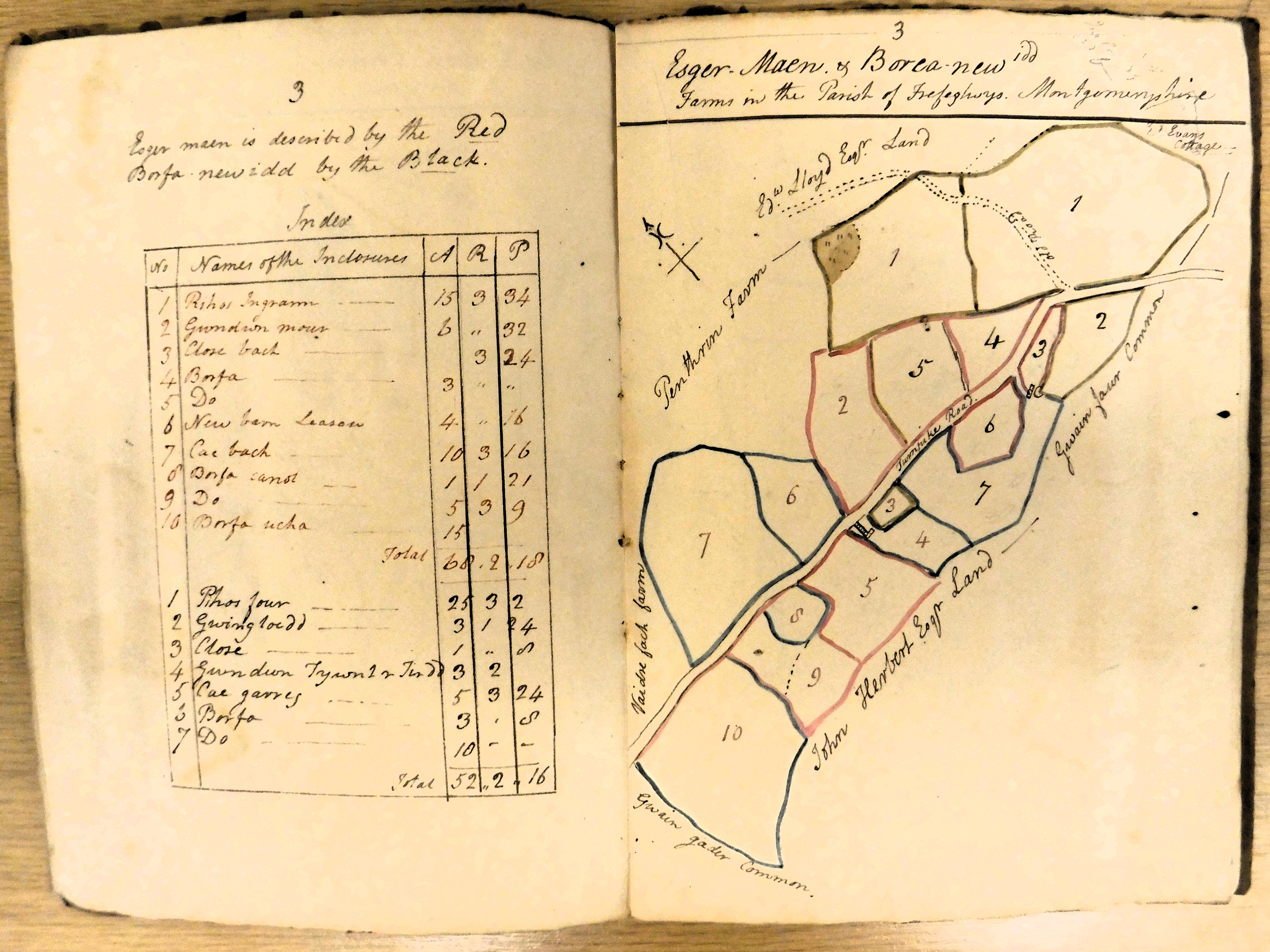
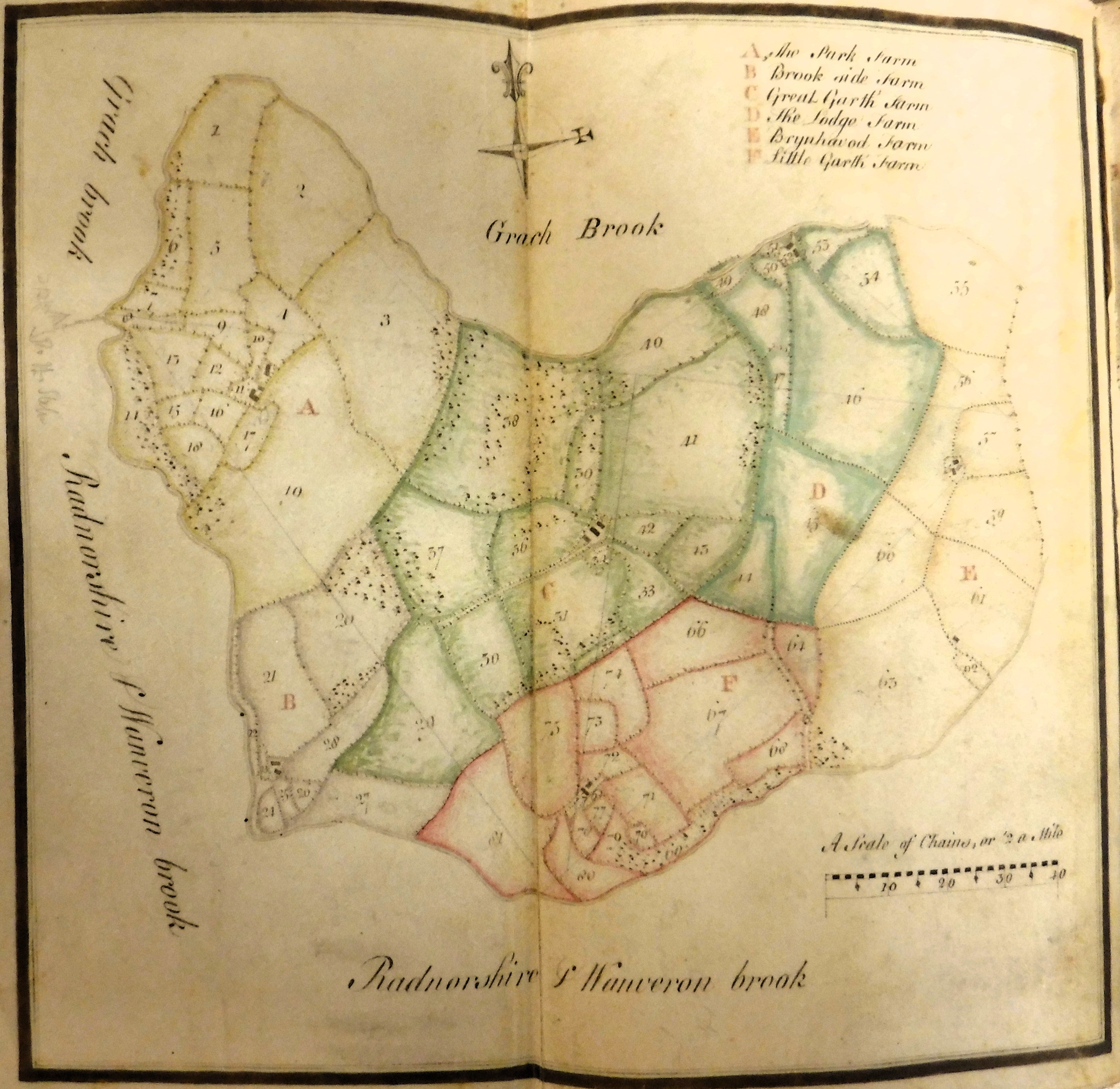
In June this year, I was fortunate to visit University College Oxford and to view the Montgomeryshire Estate record compiled by archivist Dr Robin Darwall-Smith. A selection of photographs of material contained in this fascinating archive covering the period from the late 16th to the early 20th centuries is provided above. One of my aims is to better understand the scope of University College’s former land ownerships across a large area mainly within the historic cantref of Arwystli around the present day settlements of Penstrowed, Llanwnog, Caersws, Llandinam, Trefeglwys, Y Fan, Llanidloes and Tylwych in the Upper Severn Valley and its hinterland in North Powys. The centrepieces of this once vast landholding appear to have been the Park Estate near Caersws and a property known as ‘Eskermayne’ (Esgair Maen) in the vicinity of Tylwch. However, a farm called ‘Esger Maen’ is also identified in ‘the parish of Trefeglwys,’ suggesting this name, meaning ‘stone ridge,’ may have been more widely used in historic toponymy than is the case today*. It was the discovery of a Tudor royal horse study also known as ‘Eskermayne’ – probably located on the Park Estate near Caersws – in contemporary sources that subsequently led me to the University College property record. This process is documented in three blogs from last year:
- ‘Eskermayne’ (Royal Stud at Caersws): Equestrian Heritage and Historical Ecology
- Horses, War and Religion in the Early Modern Land-based Economy of Mid Wales
- Tudor Royal Horse Studs of Montgomeryshire: The Story Concludes (for now)
Having seen the archive first hand, my plan now is to revisit some themes explored last year in a more structured way. Subjects of particular interest include: changes in land ownership from the medieval to the modern period, landscape history and equestrian heritage, as well as key historical figures connected to the area. Among these is Robert Dudley, Earl of Leicester, favourite of Queen Elizabeth 1 and her Master of the Horse, who bequeathed the Montgomeryshire Estates to University College Oxford upon his death in 1588. As discussed in the 2023 posts, the future of the area in question is also a key consideration as climate change and nature conservation point to the need for landscape regeneration, and wider recognition of the cultural significance of the historic environment. In reflecting on the latter imperatives over the past year, I have been much helped by two recent publications based on the work of late University of Cambridge botanist Oliver Rackham, both of which are reviewed on SUISIUM:
- Countryside History – edited by Ian D Rotherham and Jennifer A Moody
- The Ancient Woods of South East Wales – edited by Paula Keen
Note on Anglicisation and orthography: The historical evolution of Welsh ‘Esgair-Maen‘ (English: ‘stone ridge’) through various spellings, including ‘Esger Maen’ and ‘Eschryman,’ to become ‘Eskermayne’ provides an interesting topic for further research in itself.
*Postscript: A chance conversation has led to the discovery of Esgairmaen farm in Trefeglwys: in fact on the back road from Bwylch-Y-Fan to Llyn Clywedog next to Borfa Newydd farm which is mentioned in the estate documents shown above (bottom left).
Suggested Further Reading: https://carwyngraves.com/tir-the-story-of-the-welsh-landscape-extract
 SUISIUM