British Indian Ocean Territory and Chagos Controversy: Geopolitics and Conservation

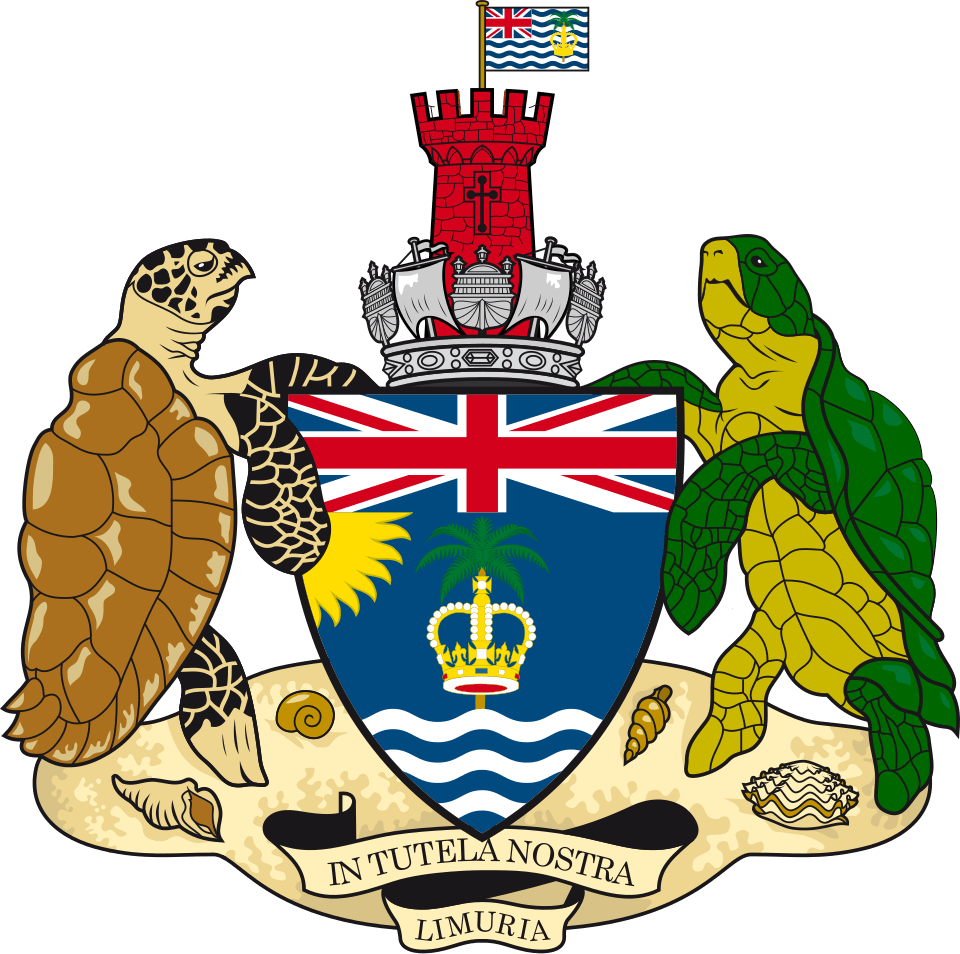
British Indian Ocean Territory coat of arms with motto ‘Limuria is in our trust’

Between 2022-2023, I curated and wrote a series of articles entitled Conflict, Post-Colonialism and Conservation for the online journal ECOS whose conclusion touched upon the historical and ongoing controversy surrounding the British Indian Ocean Territory, more widely known as the Chagos Archipelago. Following election of a Labour government in 2024, plans were announced to transfer sovereignty of the Chagos Islands, including one of the world’s largest Marine Protected Areas, to Mauritius. This arrangement was previously supported by the United States government (Biden administration), notwithstanding the presence of a strategically important joint US-UK military base on the island of Diego Garcia. The former inhabitants of this and other Chagos Islands (known as Chagossians) were forcibly removed by the British government between 1968-73 to enable development of the military base. In the context of 20th century de-colonisation by Britain and other Western countries, together with the historical claim of Mauritius to the Chagos Archipelago, onging control of this by ‘colonial powers’ was and remained highly contentious.

To signal a new and progressive approach to foreign policy, the Starmer government – prematurely and ill-advisedly in the views of many UK and international experts on the complex issues raised – embarked upon the legislative process of ceding sovereignty of the Chagos to Mauritius through the Diego Garcia Military Base and British Indian Ocean Territory Bill This bill is currently stalled in the House of Lords, while controversy around the future of the Chagos Islands and Marine Protected Area continues to grow. Some objections to the proposed UK/Mauritius Treaty are summarised by Powys-resident William Hague (Baron Hague of Richmond) in a recent Times article as follows:

  • “First, it is a poor deal for UK taxpayers, negotiated on the assumption there was no alternative, with costs running to billions over time. 
  • Second, it ignores the wishes of the Chagossians, the people Britain removed from their homes, and who overwhelmingly oppose the treaty in the UK. 
  • Third, the diplomatic calculus has shifted again, and the agreement still lacks the necessary US political backing in practice”.

While interventions by US president Donald Trump in the Chagos controversy have been highly publicised, key environmental objections to the proposed treaty have received rather less coverage. However, another recent article by Oxford University Law Professor Richard Ekins in The Critic provides a helpful summary of the proposed UK/Mauritius Treaty’s shortcomings for the future of the Marine Protected Area based on a research paper by British centre-right think tank Policy Exchange. Meanwhile, the increasingly complex UK political and geopolitical context surrounding the future of the archipelago poses a growing challenge for organisations, such as the Chagos Conservation Trust, and scientists involved in vital work to protect and restore its globally significant marine and terrestrial ecosystems. The Chagos controversy embodies the historical and contemporary intersectionality of geopolitics, natural resources and nature conservation. This has been usefully conceptualised as ‘conservation geopolitics‘ and it is a theme to which I very much hope to return in the future with critical perspectives on emerging forms of neo-colonialism, including the so-called ‘Donroe Doctrine’ as described in a further recent article on the Chatham House website.*

*https://www.chathamhouse.org/2026/01/trump-diego-garcia-and-donroe-doctrine-indian-ocean

What Boris Pasternak’s novel Doctor Zhivago reveals about Russia’s invasions of Ukraine

In February 2022, I reflected upon how the Soviet novelist Mikhail Sholokhov’s novel quartet And Quiet Flows the Don provides insights into the historical context for what became Russian’s full-scale invasion of Ukraine. In this post, I want to use Boris Pasternak’s Doctor Zhivago as a moral compass for better understanding the motivations of a war rooted in Russia’s enduring imperial, religious and Soviet identity.

Last year, the veteran international relations and Russian expert Professor Walter Clemens wrote a blog on the Washington-based Center for European Policy Analysis website entitled Back in the USSR: Zhivago’s Lessons About Russia. Here Clemens discusses the ambivalent reception of Pasternak’s novel by fellow students when he produced an English translation during a visit to Moscow in the late 1950s. It would be many years before Doctor Zhivago was published in Russia and its author was long-dead when the Nobel Prize for Literature was collected on his behalf.

Meanwhile, Sholokhov (known as the ‘Red Tolstoy’) had been awarded the prize himself in 1965, having spoken out against Pasternak’s earlier nomination. The Quiet Don quartet – an ironic title for a narrative anything but peaceful – was and remains widely feted in Russia, giving rise to a heritage industry mobilised during the early stages of the 2022 ‘special military operation’ in support of the Putin regime.

Whilst Sholokhov’s relationship with the state was by no means unambiguous, his novels do not fundamentally challenge the Soviet view of history in the same way as Doctor Zhivago. This dissidence was undoubtedly capitalised upon in the West as the book was adapted in to a widely acclaimed film directed by the British cinematographer David Lean and released in 1965. Unsurprisingly for a novel of some 500 pages in its most recent English translation, the film makes significant departures from the text but adheres to the central storyline dominated by the Russian Revolution and its aftermath, as well as the vast landscape of a country straddling Europe and Asia.

Walter Clemens’ 2024 blog uses an image from Lean’s film which juxtaposes the characters of Pasternak’s hero, Dr Yuri Zhivago, with that of his half-brother who will become a leading apparat within the Soviet regime whilst retaining a deep love of culture. Although the story is predominantly remembered in the West as a historical romance, the main characters of the novel also embody different aspects of the Russian psyche, including a profound fascination with religion and philosophy, on the one hand, and science and technology on the other. The narrative also recognises the potential of the state – whether imperial or Soviet – for savage repression and violence at home and abroad.

Pasternak was born in the Ukrainian city of Odesa, later the setting for Soviet film director Sergei Eisenstein’s Battleship Potemkin, which dramatizes the same brutality. However, the novelist’s life was mostly spent in and around Moscow, plus briefly in the Russian Urals where the second part of Doctor Zhivago is mainly set. Whilst Sholokhov is essentially a provincial writer – this is an observation rather than a criticism – Pasternak belonged to a cosmopolitan and international literary milieu and some of his characters, like members of his own family, are forced in to exile in the West.

However, notwithstanding existential threats, Boris Pasternak chose to remain in Russia and his best remembered work still impresses upon its readers the ultimate victory of humanitarian, civilised, artistic and, above all, spiritual values when confronted with violent conflict and repression. To adapt the title of Professor Clemens blog for CEPA, ‘Zhivago’s Lessons For Ukraine: Right Now in 2025’ (and particularly for the Washington-based regime’s apparent plan to make Russia great again).