
British Indian Ocean Territory and Chagos Controversy: Geopolitics and Conservation
Between 2022-2023, I curated and wrote a series of articles entitled Conflict, Post-Colonialism and Conservation for the online journal ECOS whose conclusion touched upon the historical and ongoing controversy surrounding the British Indian Ocean Territory, more widely known as the Chagos Archipelago. Following election of a Labour government in 2024, plans were announced to transfer…
Severn Valley Water Management Scheme: Adaptation Pathways
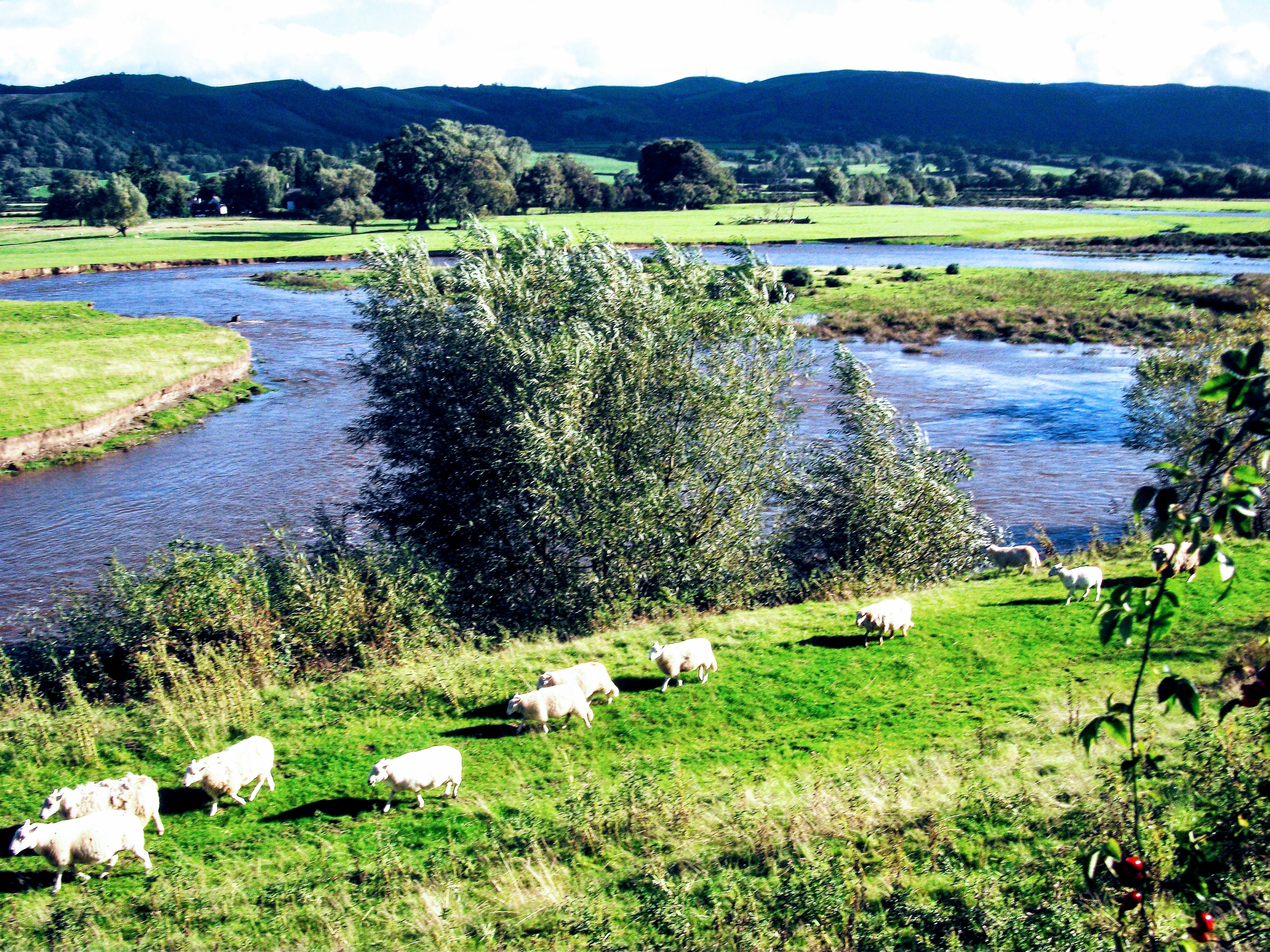
SEVERN VALLEY WATER MANAGEMENT SCHEME 2026 CONSULTATION SUBMISSION The 21st century has been notable for a series of major flood events along the River Severn, impacting land and communities from Powys to its estuary in Gloucestershire. While the Severn Valley Water Management Scheme (SVWMS) is focussed on upper catchment settlements between Llanidloes and Shrewsbury, it…
Review of Ecocide in Ukraine – The Environmental Cost of Russia’s War
Tsymbalyuk, Darya (2025): Ecocide in Ukraine. The Environmental Cost of Russia’s War: Polity. ISBN: 978-1-509-56250-3 A version of the following review is due for publication in the online nature conservation journal ECOS. At the present time, conservation is not only a tragic casualty of Russia’s wars on Ukraine since 2014 but has become linked to…
What Boris Pasternak’s novel Doctor Zhivago reveals about Russia’s invasions of Ukraine
In February 2022, I reflected upon how the Soviet novelist Mikhail Sholokhov’s novel quartet And Quiet Flows the Don provides insights into the historical context for what became Russian’s full-scale invasion of Ukraine. In this post, I want to use Boris Pasternak’s Doctor Zhivago as a moral compass for better understanding the motivations of a…
Return to ‘Eskermayne’ (Welsh: Esgair Maen – Stone Ridge)
In June this year, I was fortunate to visit University College Oxford and to view the Montgomeryshire Estate record compiled by archivist Dr Robin Darwall-Smith. A selection of photographs of material contained in this fascinating archive covering the period from the late 16th to the early 20th centuries is provided above. One of my aims…
Review of Countryside History – The Life and Legacy of Oliver Rackham
Countryside History – The Life and Legacy of Oliver Rackham, Editors Ian D Rotherham and Jennifer A Moody Pelagic Publishing 2024 ISBN 9781784273163 438 pages (150 colour photos, 10 b&w photos, 31 maps, 21 diagrams) Hardback £50 The following review has just been published in the online conservation journal ECOS, and follows an earlier one…
Ponies engaged in Conservation Grazing at Cors Fochno
Pictures from recent visits to Cors Fochno (also known as Borth Bog) near Aberystwyth. According to Natural Resources Wales: ‘Cors Fochno is one of the largest actively growing raised bogs in the lowlands of Britain, with peat up to 8 metres deep’. Cors Fochno is part of the UNESCO Dyfi Biosphere.
Crises? What Crises? – Changing Course for Sustainability and Adaptation
A recent exchange about ‘crises’ – ecological, climate, environmental – recalled a former UK prime minister’s infamous question: “Crisis? What crisis?” This occurred in the 1979 so-called ‘Winter of Discontent’, an allusion to Shakespeare’s Richard III, which heralded a seismic shift in British politics. It is now widely felt that we live in a globalised…
Koala – A Natural History and an Uncertain Future by Danielle Clode
2025 update: Highly informative BBC World Service programme on Australia’s Extinction Crisis. The following book review illustrates the relationships between climate adaptation to support more resilient ecosystems, environmental governance for nature conservation, large-scale regenerative sustainability programmes (in this case for forestry) together with animal heritage and welfare. A ‘case study’ from Australia has been selected…
The Ancient Woods of South-East Wales by Oliver Rackham (Edited by Paula Keen)
South-east Wales was one of the areas, such as the Forest of Dean, the Southern Lake District, west Argyll, or Killarney, where large areas of woodland survived because there was an industrial use for it (charcoal); in contrast to Norfolk or Montgomery where there were no industrialists to restrain landowners from grubbing up trees. (‘Tudor…
Something went wrong. Please refresh the page and/or try again.
Follow My Blog
Get new content delivered directly to your inbox.
 SUISIUM