
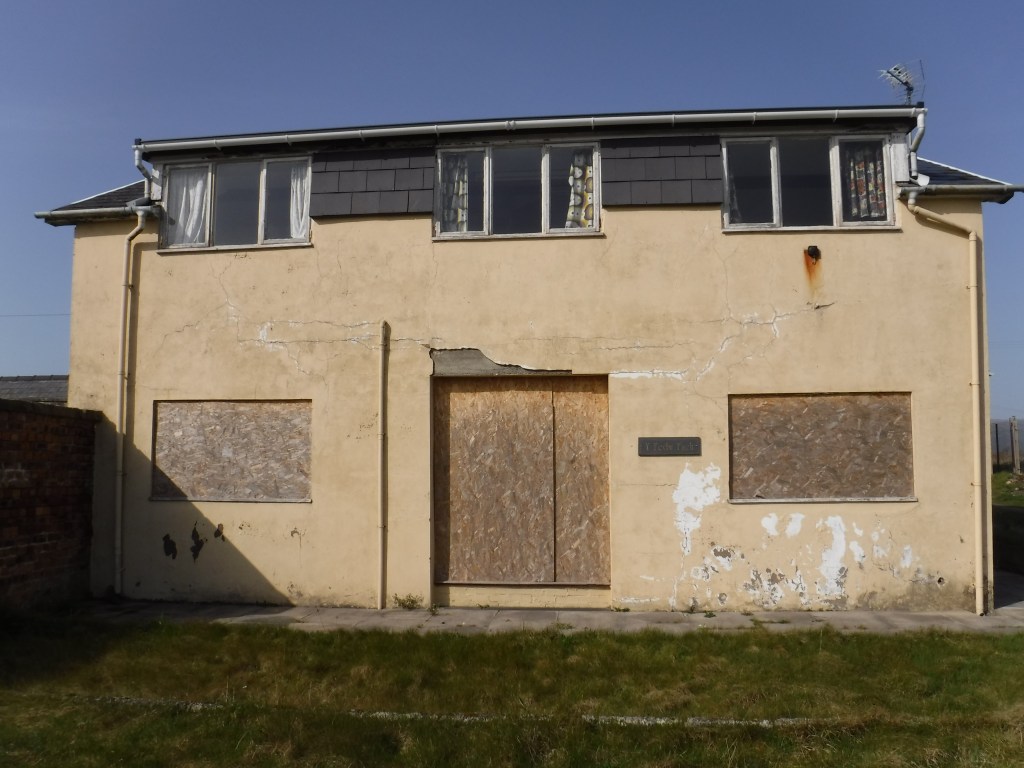
Along with the sustainability of agriculture and food systems (as well as other major supply chains), the sustainability of built environments, including infrastructure, poses one of humanity’s greatest challenges. This post will focus on the regeneration of previously developed land and buildings, with the added proviso that from an environmental perspective site re-use is generally preferable to redevelopment.(1/2) It also draws on a body of work published by the European Union between 2018-21 using the acronym RESTORE (Rethinking Sustainability Towards a Regenerative Economy) and, in particular, a 2018 report entitled Sustainability, Restorative to Regenerative. (3/4) This report carries the extended subheading: “An exploration in progressing a paradigm shift in built environment thinking, from sustainability to restorative sustainability and on to regenerative sustainability.” RESTORE describes itself as “the first carbon net positive European research project and network.”(5) The 2018 report defines “regenerative sustainability as “enabling social and ecological systems to maintain a healthy state and to evolve.”
The view here – others may differ! – is that sustainability where possible needs to prioritise re-use of existing built environments. This may include change of use from commercial designations to residential. Rigorous systems of planning, design codes, building regulations and construction practices – rather than a trend towards deregulation and lower standards – are vital for high quality development. At the opposite extreme, are large-scale speculative new build projects, some of which may be demolished before occupation. Chinese urbanization has become notorious for this practice (6); but rapid growth around the English city of Cambridge has also seen newly-constructed building demolished because of poor standards of construction (a historic and continuing problem in the UK, even in high end markets).(7) Indeed, what has become known as the UK “cladding crisis” provides a tragic example of how weakening building regulations not only severely compromise safety(8), but also contributes to endemic non-sustainability (economic and environmental) for both residents and society. The cost of rectifying Britain’s cladding crisis has been estimated at £50 billion by one specialist contractor.(10)
This crisis raises questions not just about regulation of the built environment to support regenerative sustainability but also its political economy and underlying financial structures. These subjects are too vast to elaborate here, but it is obvious that systems need to be in place to support long-term investment, protect legitimate stakeholders from exploitation and ensure the interests of less powerful groups are safeguarded. In reality, there are strengths and weaknesses, opportunities and risks associated with different models for the development and operation of built environments and associated infrastructure. Here, the focus is mainly on Europe and the mixed economy model adopted since World War II and subsequent collapse of communism in the late 1980s. In this context, the Central European city of Vienna provides an interesting case study of how a positive approach to public investment in housing since the early 20th century has preserved affordable urban living, contributed to a high quality public realm and enabled adaptation of the built environment along the restorative to regenerative sustainability spectrum. The vision underpinning this approach is describe in a short 2013 paper by the city council.(11)

An article from NatureScot (Scotland’s Nature Agency) entitled “A Viennese Green Dream” profiles Wohnpark Alt-Erlaa, another well known public housing development some six miles from the historic city centre.(13) Alt-Erlaa was constructed in two phases between 1968-85. Described as an “almost self-sufficient micro-town”, Wohnpark Alt-Erlaa is home to about 11 000 residents.(14) “Wohnpark translates as “residential park” and the development contains over 3000 apartments, each with a balcony or loggia.
The multifunctional complex also comprises two health centres, two kindergartens, three schools, a day-care centre, a public library, a gym, six solariums, a mall, a church, bars, restaurants, playgrounds, an administration building and several leisure facilities and hobby rooms for more than 20 leisure clubs. There is a swimming pool on every rooftop and an indoor pool and sauna in every basement.(14)
NatureScot cite Wohnpark Alt-Erlaa as an outstanding example of green infrastructure deployment (see below). It should also be noted Vienna’s green belt almost completely surrounds the city and some 12 000 hectares is open to the public.(16/17) An orbital route – “Rundumadum-Wanderweg”- opened in 2005 and extends around the city in 24 sections for over 120 kilometres with all starting and finishing points accessible by public transport.

Accessibility is also central to the planning of Aspern Seestadt, one of Europe’s largest urban development projects – which utilizes the site of a former airfield – and is intended to accommodate Vienna’s rapid population growth (forecast to be 2 million by 2027). (18/19) “Why Vienna gets high marks” is a 2018 European Investment Bank publication which describes the city’s development since the mid-1980s.(20) Vienna’s high density evolution might be contrasted with those of UK cities outside London where urban sprawl and lack of investment in public transport have been a feature of spatial planning in the 21st century. This shortcoming is discussed in a new report by Centre for Cities entitled “Measuring up: comparing public transport in the UK and Europe’s biggest cities.”(21) It cites the widely held view that lack of investment in high-quality public transport is one of the main factors in regional inequality and a major constraint for the government’s levelling up agenda. However, without planning for higher density of the kind associated with European cities, “sprawling suburbs” will continue to stunt productivity beyond London, according to the Financial Times.(22)
Notwithstanding the problems described above, major stakeholders in the UK’s built environment continue to express commitment to developing the built environment and associated infrastructure along the restorative to regenerative sustainability spectrum. This is reflected in two new reports by the global real estate services company Jones Lang Lesalle (JLL): “Regeneration – shaping the built environment to create value for all”; and “Sustainability and value in the regions.”(23/24) However, increasing financialisation of regional housing markets in the UK poses both a challenge, for those seeking affordable homes, as well as an opportunity for long-term investment by financial institutions in the construction of high quality places to live and work. This challenge and opportunity is no means confined to Britain’s major cities.(25) Recent work on housing by the Future Generations Commissioner for Wales highlights the links between housing supply, affordability, sustainable development and decarbonisation.(26). To conclude, the pathway to regenerative sustainability requires a genuinely holistic approach.
References
1. https://www.futurenetzero.com/2021/07/09/buildings-must-be-reused-not-demolished/
2. https://architecturetoday.co.uk/the-rise-of-reuse/
3. https://www.eurac.edu/en/institutes-centers/institute-for-renewable-energy/projects/restore
4. https://www.eurestore.eu/wp-content/uploads/2018/04/Sustainability-Restorative-to-Regenerative.pdf
6. https://www.vice.com/en/article/epn3bp/china-demolition-building-kunming
8. https://en.wikipedia.org/wiki/Grenfell_Tower_fire
9. https://en.wikipedia.org/wiki/United_Kingdom_cladding_crisis
11. https://www.wien.gv.at/english/environment/klip/case-study-housing.html
12. https://en.wikipedia.org/wiki/Red_Vienna
13. https://www.nature.scot/viennese-green-dream
14 https://nonument.org/nonuments/wohnpark-alt-erlaa
15. https://www.wallpaper.com/architecture/the-vitra-design-museum-explores-communal-living
16. https://www.wien.info/en/sightseeing/green-vienna/green-walls-in-vienna-347292
17. https://www.breiling.org/publ/vienna_green_belt.pdf
18. https://www.theb1m.com/video/building-vienna-s-6bn-city-within-a-city
19. https://www.aspern-seestadt.at/en
20. https://www.eib.org/en/publications/city-transformed-vienna
21. https://www.centreforcities.org/publication/comparing-public-transport-uk-europe-cities
22. How sprawling suburbs are stunting productivity in UK cities | Financial Times (ft.com)
23. https://www.jll.co.uk/en/trends-and-insights/research/regeneration
24. https://www.jll.co.uk/en/trends-and-insights/research/sustainability-and-value-in-the-regions
 SUISIUM